 Sign In / Sign Up
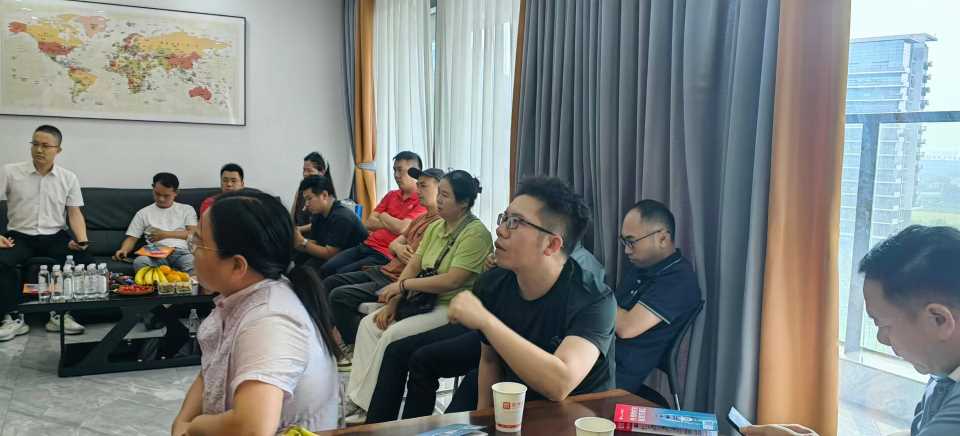
Dongguan, June 2, 2026 – The used car export industry salon themed “New Rules, New Paths, New Profits”, hosted by TIGGER TECHNOLOGY CO.,LTD.IN DONGGUAN CITY, was successfully held at Tianan Digital City, Zone B, Dongguan, China. The salon attracted representatives from more than 30 used car export enterprises, logistics service providers, and certification agencies from Dongguan, Shenzhen, Guangzhou, and surrounding areas. Participants engaged in a 4-hour in-depth discussion on hot topics including the tightening of Russian market access requirements in 2026, the implementation challenges of the 180-day after-sales confirmation letter for new vehicles, and transshipment channels to Central Asia and Africa. Multiple real-life cases were shared, hitting the core pain points of the industry.

The New Policy: The 180-Day Confirmation Letter Becomes an “Insurmountable Red Line”
The first keynote speech was delivered by Zhang Minghui, Export Business Director of Dongguan Huaxin International Trade Co., Ltd. Zhang has worked in used car export for 10 years and has led the export of over 8,000 vehicles to Russia, Kazakhstan, and Kyrgyzstan.
“Many people think the 180-day policy is just about filling out one more form – wrong. It directly cuts off our most profitable vehicle sources,” Zhang said at the outset.
He explained the core requirement of the “Notice on Further Regulating the Administration of Used Car Exports” effective from January 1, 2026: For the export of “near-new vehicles” or “zero-kilometer used cars” that have been registered for less than 180 days, a “After-Sales Maintenance Service Confirmation Letter” issued by the original manufacturer is mandatory. Without this confirmation, the vehicle cannot be cleared at the destination port and may even face return shipping.
“In March this year, we had a batch of GAC Aion vehicles registered in January 2026. We planned to export them to Kyrgyzstan and then re-export to Russia. The cars were in perfect condition, with an expected profit of $3,000 per unit. But the OEM flatly refused to issue the confirmation letter, citing that ‘used car channels are not within our authorized system.’ In the end, we had to sell them domestically, losing 2,000 yuan per car,” Zhang recalled with frustration.
He pointed out the industry’s most real pain point: major Chinese OEMs (BYD, Geely, Changan, Great Wall, etc.) are extremely conservative about granting after-sales authorization for used car export channels and basically will not issue confirmation letters. This forces exporters to completely give up near-new vehicles aged less than 6 months, and instead choose “older used cars” aged over 6 months or even 1-3 years, which have significantly thinner profit margins.
“In the future on the Russian market, you either accept lower profits or completely change your vehicle sourcing strategy,” Zhang concluded.
Soaring Russian Compliance Costs: Euro-5 Certification + ERA-GLONASS Add $800 per Unit
The second speaker was Chen Wanlin, Representative in Russia of Shenzhen Yuanda Automotive Service Group Co., Ltd. (via video link). She has long been based in Moscow, specializing in Russian customs clearance and certification of Chinese used cars.
“Since March 2026, Russian customs has suddenly upgraded its scrutiny of Euro-5 emission certificates for Chinese used cars,” Chen said. “Previously, equivalent reports from third-party testing agencies could pass, but now the Euro-5 compliance document must be issued by the original manufacturer or its authorized body. However, Chinese OEMs hardly provide this service, causing many vehicles to get stuck at the border.”
She gave a real example: a Guangzhou company exported 30 Chery Tiggo 5x to Moscow. Unable to obtain the manufacturer’s Euro-5 certificate, they had to buy unofficial documents through “special channels,” paying an extra $400 per vehicle, and still faced the risk of seizure.
“Even more costly is the ERA-GLONASS emergency call system,” Chen added. The system requires hardware installation and activation at certified centers within Russia, costing about $300-500 per vehicle, with a waiting period of 2-4 weeks. “Many exporters never budget for this, and after arrival, they find that extra costs total $700-800 per unit, wiping out all profit.”
She advised exporters: before signing a contract, confirm whether the Russian buyer will bear the cost of ERA-GLONASS installation; otherwise, include it clearly in the CIF price.
Panel Discussion: Survival Difficulties and Breakthrough Directions for SMEs
During the panel discussion, Wang Zhiheng, General Manager of Dongguan Hengtong Used Car Export Co., Ltd., struck a chord with the audience:
“In the past, used car export profits came from information asymmetry. Now information is transparent, but compliance costs have doubled,” Wang calculated. For an ICE SUV with a CIF price of $6,000, total compliance costs (duties, certification, logistics fees) in 2025 were about $700. In 2026, due to the 180-day policy, loss of near-new sources, stricter Euro-5 certification, and mandatory ERA-GLONASS, actual costs have risen to $1,400-1,700 per unit, an increase of over 100%.
“For small and medium enterprises like us, working capital is already tight. Now each vehicle requires nearly $1,000 more in tied-up capital, plus the risk of being stuck at the destination port – I’m already considering scaling back Russian business and shifting to Africa and Central Asia,” Wang’s remarks were met with nods from many small business owners.
Organizer’s Summary: Compliance Stratification, Survival of the Fittest
Ron, CEO of Export Business at TIGGER TECHNOLOGY CO.,LTD.IN DONGGUAN CITY, concluded that in 2026 the used car export industry has entered a critical phase of “compliance stratification and survival of the fittest.” Barriers on the Russian market continue to rise, but demand remains strong. Emerging markets such as Africa and Central Asia have lower initial entry costs, but information asymmetry, opaque logistics, and payment risks cannot be ignored.
“Our original intention in hosting this salon was to help used car dealers understand policy changes, share compliance resources, and reduce trial-and-error costs,” Ron said. He emphasized that TIGGER TECHNOLOGY CO.,LTD.IN DONGGUAN CITY will continue to provide one-stop services including compliant vehicle sourcing, destination certification processing, multimodal logistics solutions, and overseas customs clearance support, helping Chinese used car exporters find stable and profitable paths under the new regulations.

For the full salon PPT, detailed Russian certification cost sheet, and response plans for the 180-day policy, please contact TIGGER TECHNOLOGY CO.,LTD.IN DONGGUAN CITY.